Open Innovation Stack Public proposal

Infographics

Eight visual explanations of the Open Innovation Stack proposal.

Public proposal. These visuals explain the proposal; they are not evidence that the proposed infrastructure has been deployed.
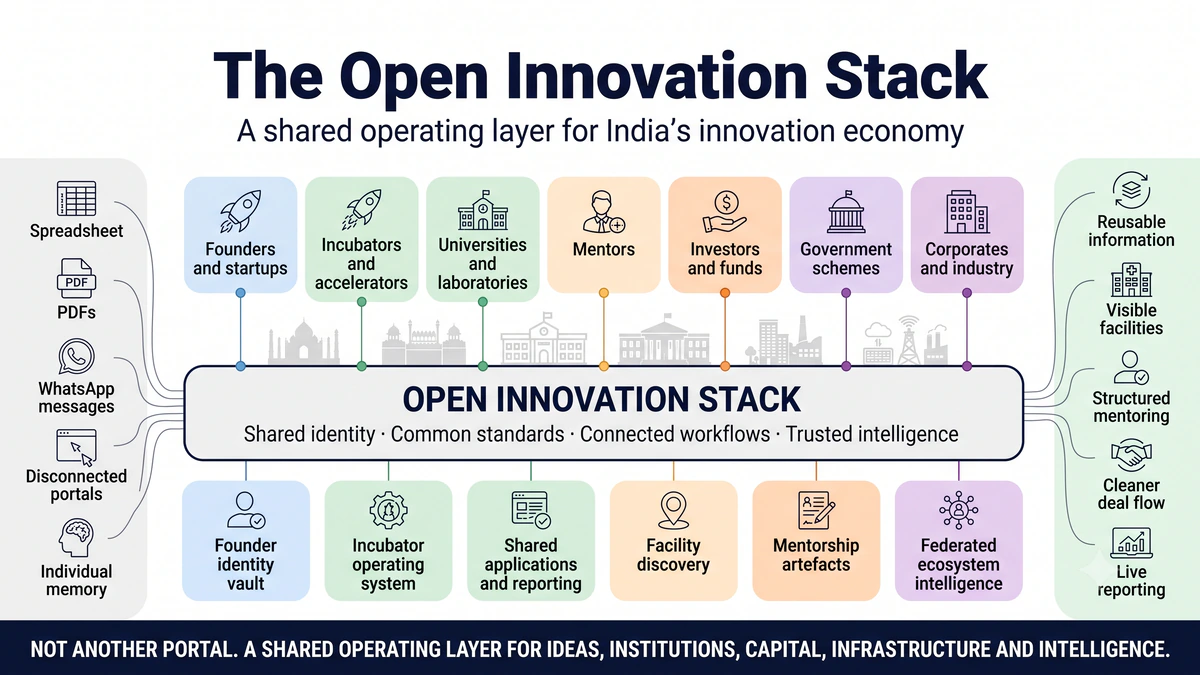
Spreadsheets, PDFs, WhatsApp messages, disconnected portals, and individual memory flow into an Open Innovation Stack linking founders, incubators, universities, mentors, investors, government, and corporates to shared identity, applications, facility discovery, mentoring records, ecosystem intelligence, and reporting.
The Open Innovation StackDisconnected tools and ecosystem actors connect through shared identity, standards, workflows, and trusted intelligence.Asset status: approved
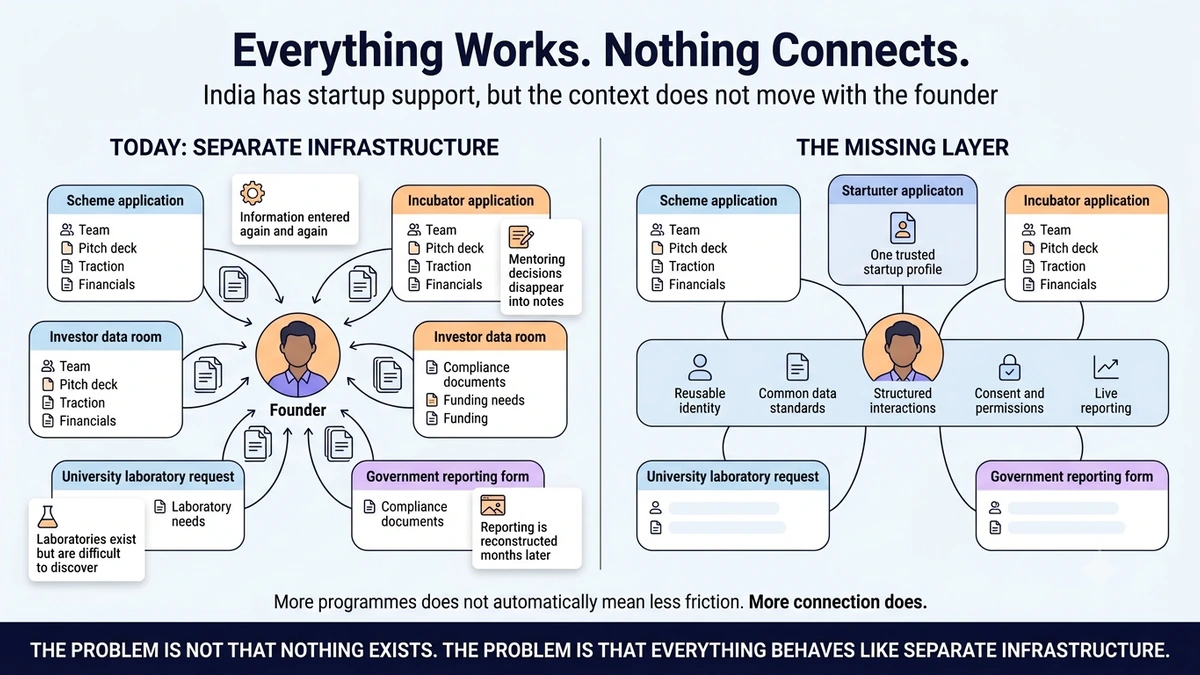
Two-part comparison showing a founder repeatedly entering information into separate scheme, incubator, investor, university, and government systems, then showing those destinations connected through one trusted startup profile and a shared layer of identity, data standards, structured interactions, permissions, and live reporting.
Everything Works. Nothing Connects.A reusable identity, common standards, structured interactions, consent, and live reporting form the missing layer between separate startup-support systems.Asset status: approved
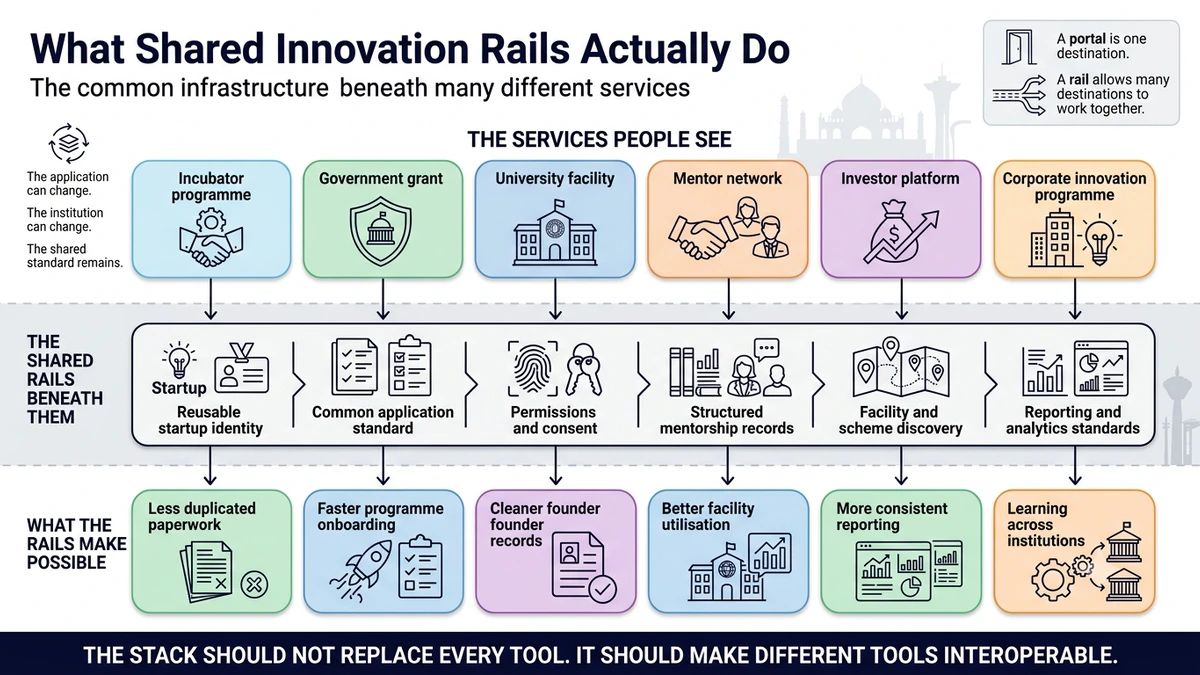
Layered diagram with incubator, grant, university, mentor, investor, and corporate services above shared rails for startup identity, application standards, permissions, mentoring records, facility discovery, and reporting, followed by outcomes such as less duplicated paperwork and better facility use.
What Shared Innovation Rails Actually DoDifferent services remain independent while shared identity, applications, permissions, records, discovery, and reporting make them interoperable.Asset status: approved
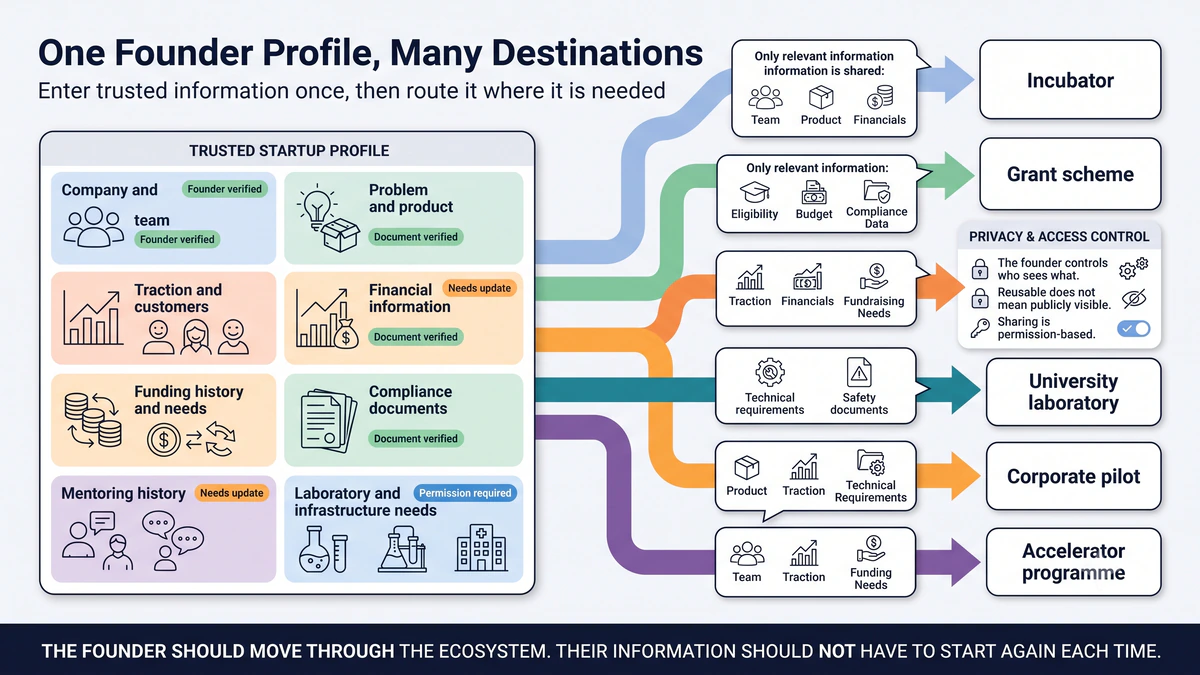
A trusted startup profile containing company, product, traction, financial, funding, compliance, mentoring, and laboratory information routes selected fields to an incubator, grant scheme, university laboratory, corporate pilot, and accelerator under privacy and access controls.
One Founder Profile, Many DestinationsA founder maintains one trusted company profile and shares only the information each destination needs.Asset status: approved
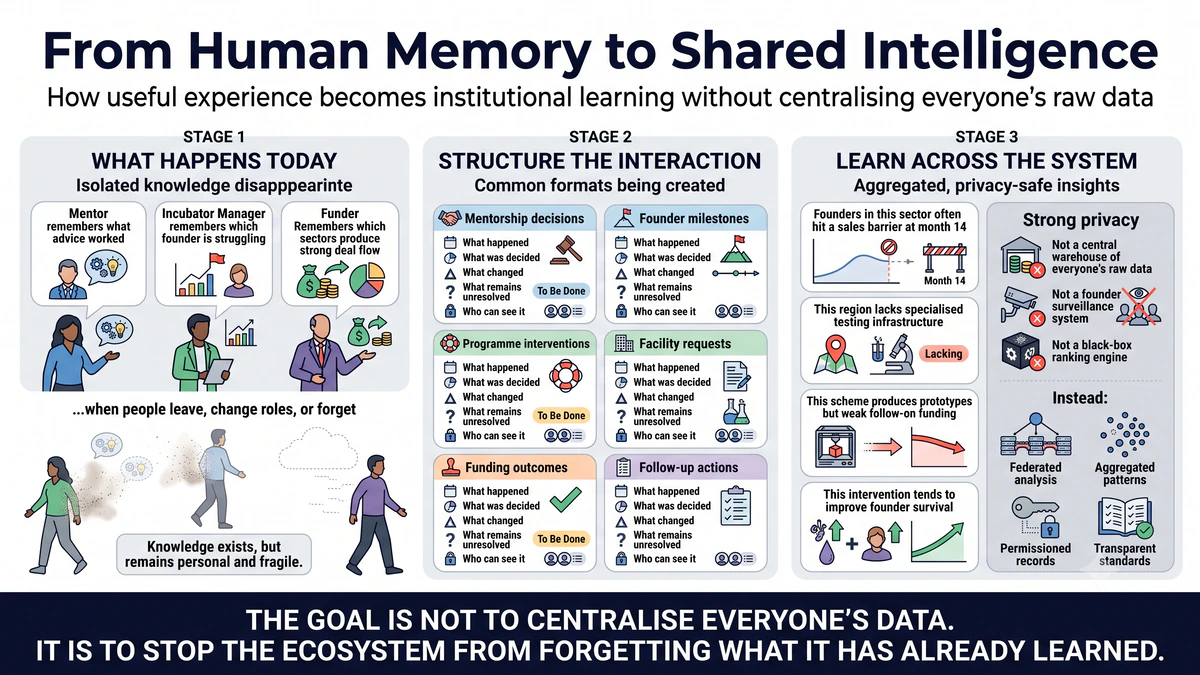
Three-stage diagram showing useful knowledge being lost when people leave or forget, six interaction types recorded with common fields, and privacy-safe ecosystem insights about milestones, facilities, funding, and interventions without creating a central warehouse, surveillance system, or black-box ranking engine.
From Human Memory to Shared IntelligenceStructured interactions turn fragile personal knowledge into aggregated, permissioned, privacy-safe ecosystem learning.Asset status: approved
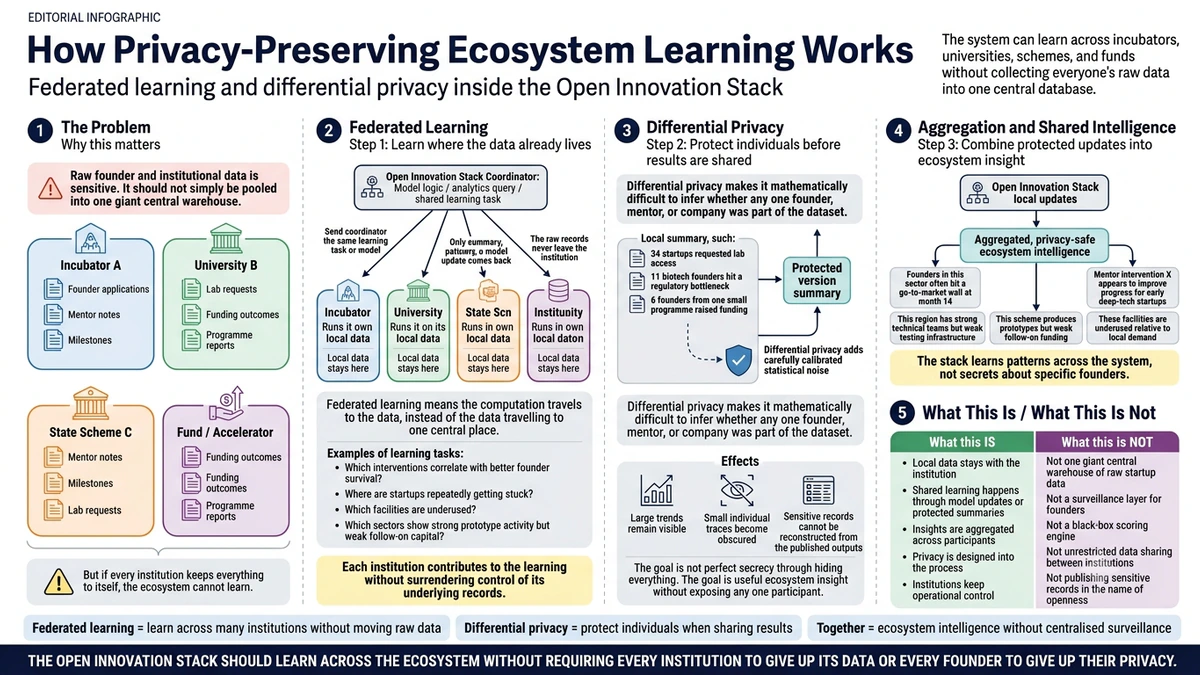
Five-part explainer showing founder and institutional records staying with incubators, universities, schemes, and funds; federated learning sends computation to each participant; differential privacy obscures individual traces; and only aggregated ecosystem patterns are shared.
How Privacy-Preserving Ecosystem Learning WorksFederated learning keeps raw institutional data local while differential privacy protects individuals before aggregated ecosystem insights are shared.Asset status: approved
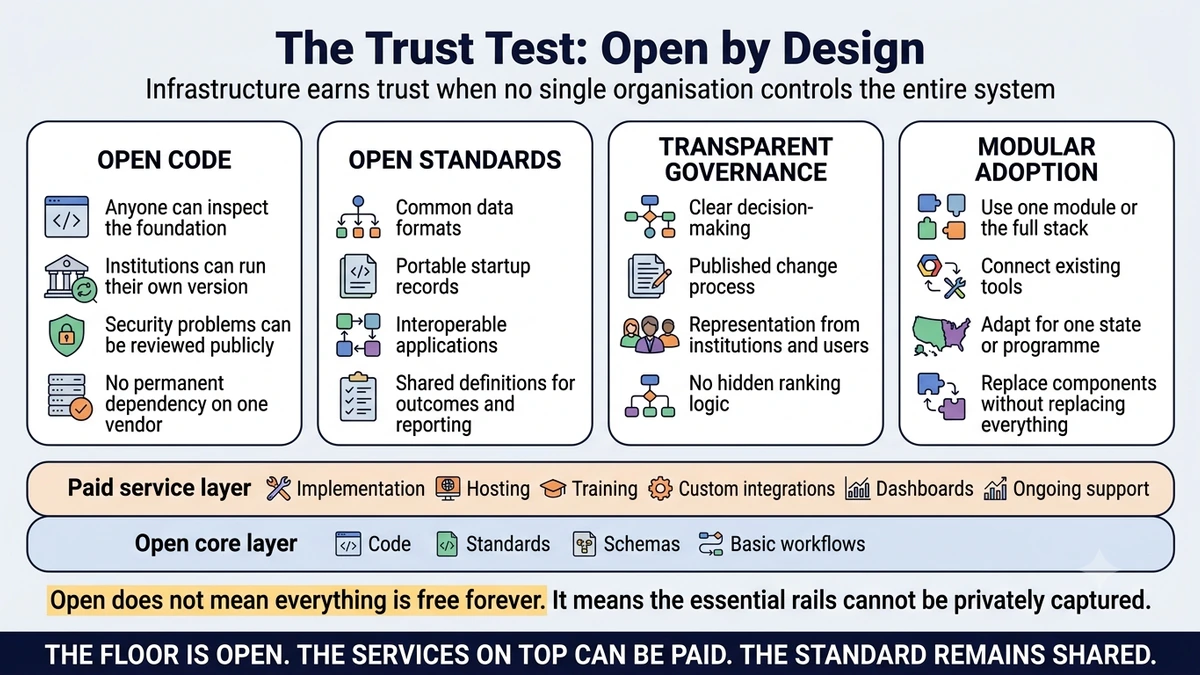
Four columns describe open code, open standards, transparent governance, and modular adoption, above a paid service layer for implementation, hosting, training, integrations, dashboards, and support, and an open core layer for code, standards, schemas, and basic workflows.
The Trust Test: Open by DesignOpen code, open standards, transparent governance, and modular adoption protect the core while supporting paid implementation services.Asset status: approved
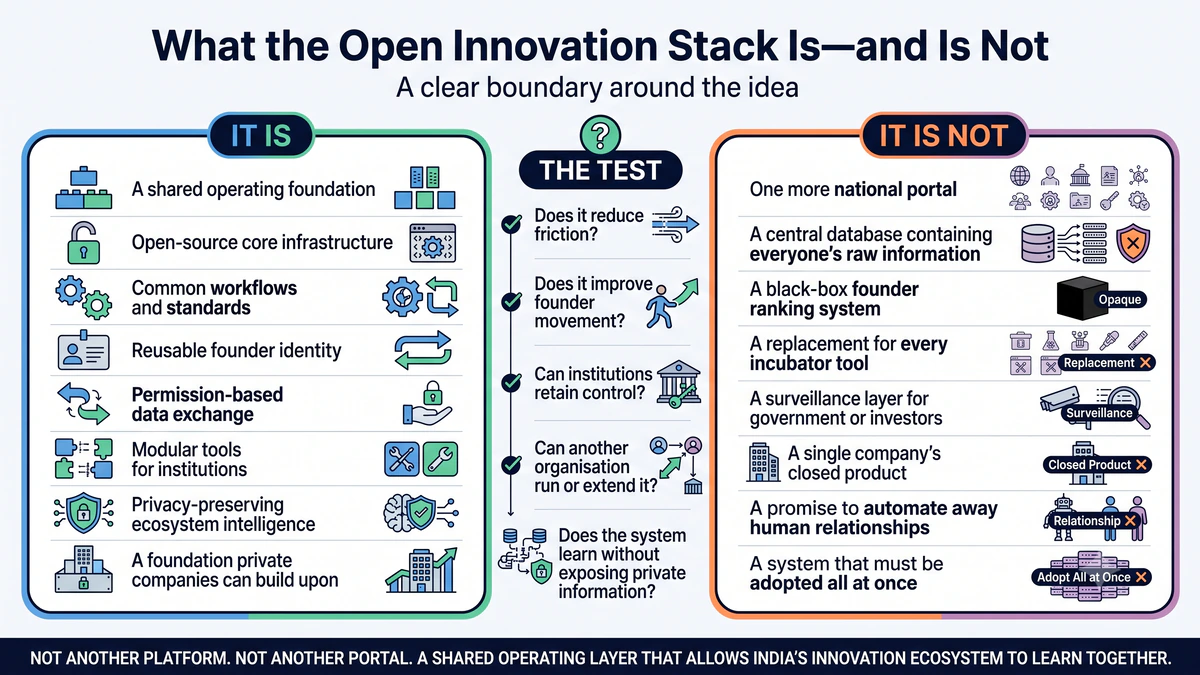
Boundary diagram listing the stack as shared open-source infrastructure with common workflows, reusable identity, permission-based exchange, modular tools, and privacy-preserving intelligence; contrasting it with a national portal, central database, black-box ranking, surveillance, closed product, automated-away relationships, or all-at-once system.
What the Open Innovation Stack Is—and Is NotThe stack is an open, permissioned, modular foundation; it is not a central database, ranking engine, surveillance layer, closed product, or replacement for every tool.Asset status: approved
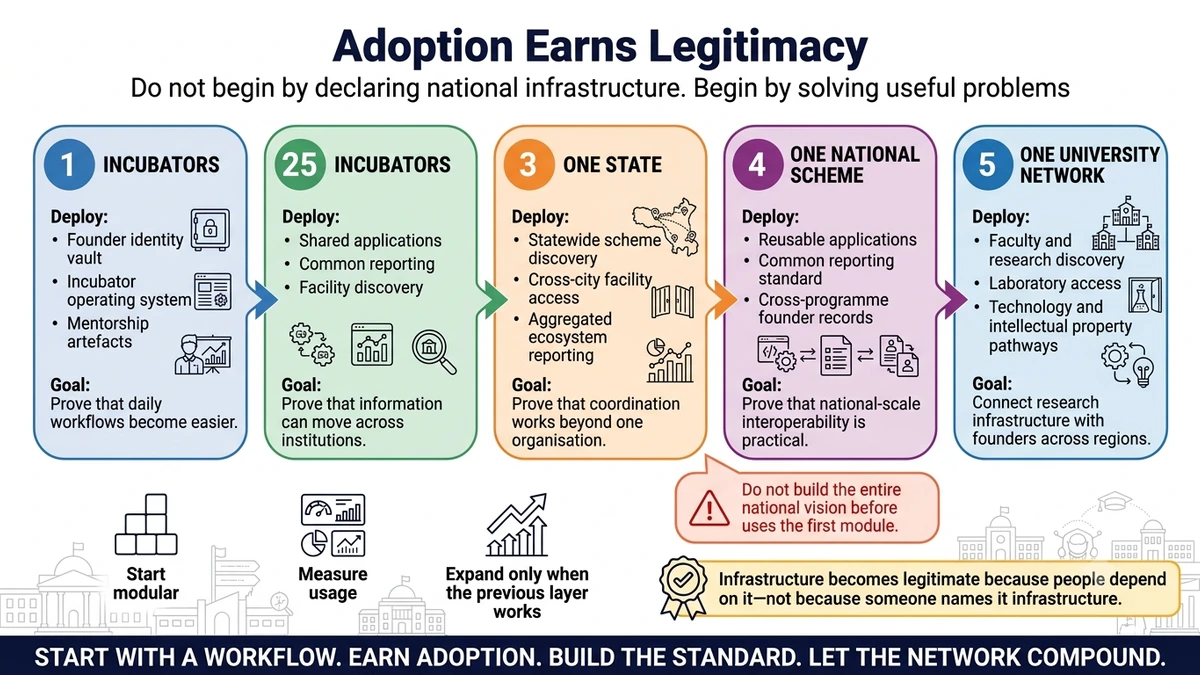
Five-step adoption path moving from one incubator to 25 incubators, one state, one national scheme, and one university network, with the systems deployed and goals at each step, followed by reminders to start modular, measure usage, and expand only when the previous layer works.
Adoption Earns LegitimacyStart with useful incubator workflows, measure adoption, and expand through institutions, a state, a national scheme, and a university network.Asset status: approved
Search the stack

Pages, the article, and infographics.

moveEnter openEsc close